
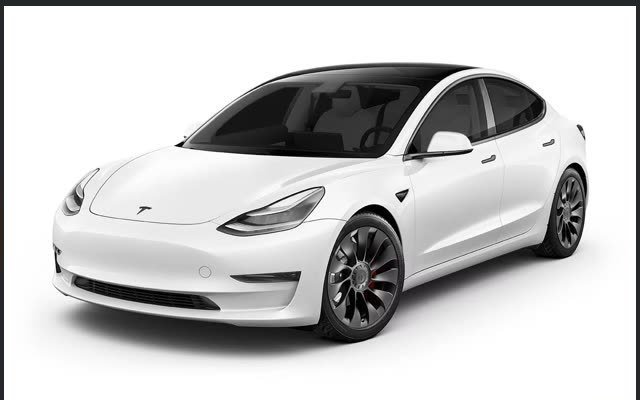
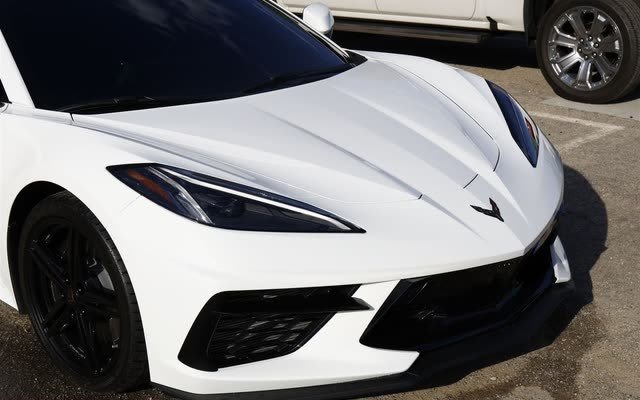
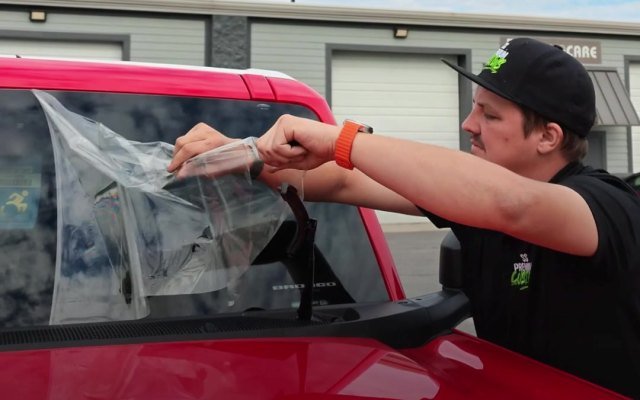
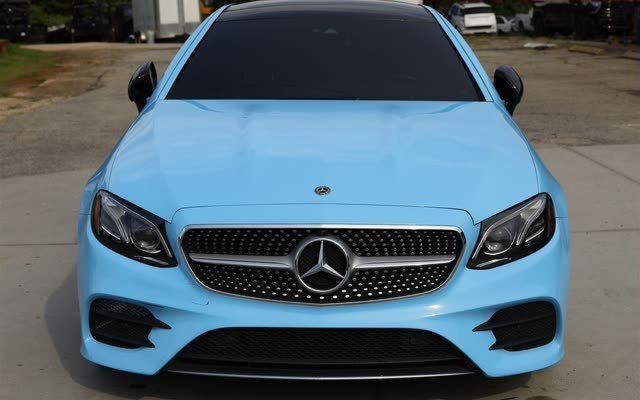


Two questions come through the door at our Inman shop almost every week. The first: what is the actual difference between a wrap and PPF? The second, usually right after someone learns color PPF exists: should I get the colored one or the clear one?
From across a parking lot all three can look the same. Up close they are different materials built for different jobs, and they age very differently. Here is the straight version of wrap vs PPF — what each film is, what it does and does not do, the options, and how to pick the right one for your car.
The short answer: a vinyl wrap changes how your car looks. Clear PPF protects how your car looks. Color PPF does both — and costs the most for exactly that reason.
What a vinyl wrap is
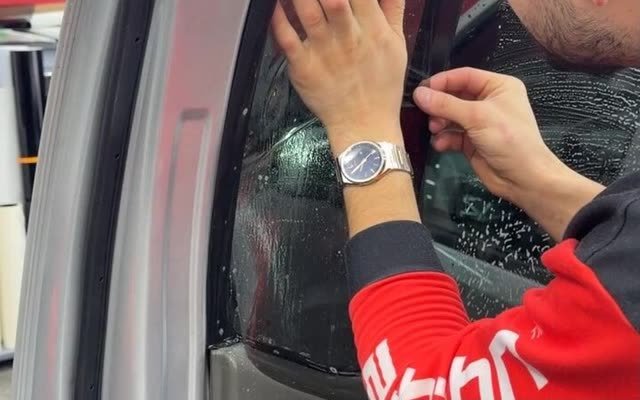
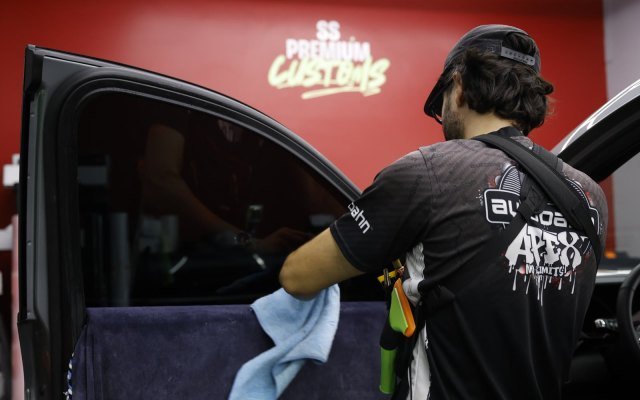
A wrap is cast vinyl — a PVC film roughly 3 to 4 mil thick (a mil is a thousandth of an inch) with adhesive on the back. It is laid over the factory paint panel by panel, heated so it conforms to every curve, then trimmed and tucked at the edges. Its whole reason to exist is appearance.
And on appearance, nothing beats it. Vinyl comes in over a thousand colors and finishes: gloss, satin, matte, metallic, chrome, color-shift, brushed metal, carbon-fiber texture and fully printed custom graphics. If you can picture it, someone makes it in vinyl.
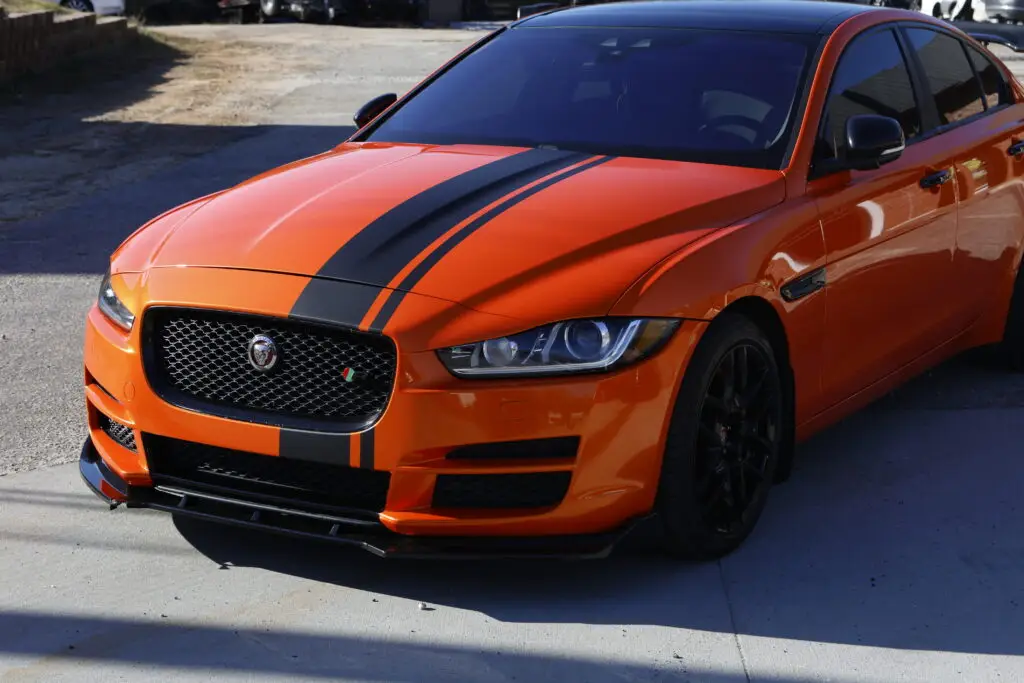
What vinyl does not do is stop rock chips. At 3 to 4 mil it is a skin, not armor. It keeps UV, light wash marks and grime off the paint underneath, but a stone at highway speed goes straight through to the clear coat. Scratches in the vinyl also stay there — it does not heal.
Expect a quality wrap to last roughly 3 to 6 years, depending on the film and how much sun the car sees. A full color change usually takes us about three days, and when you are ready for something new it peels off cleanly, leaving the factory paint as it was.
What PPF is
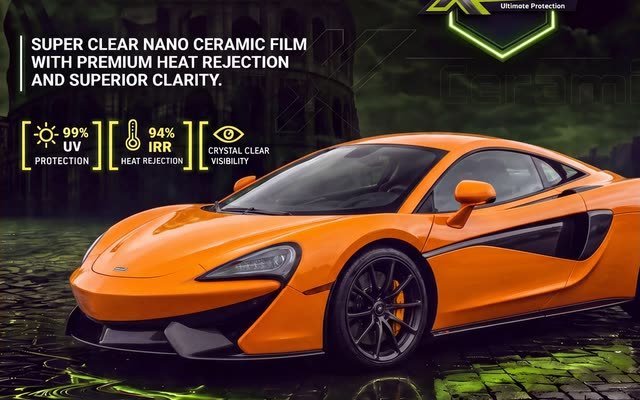
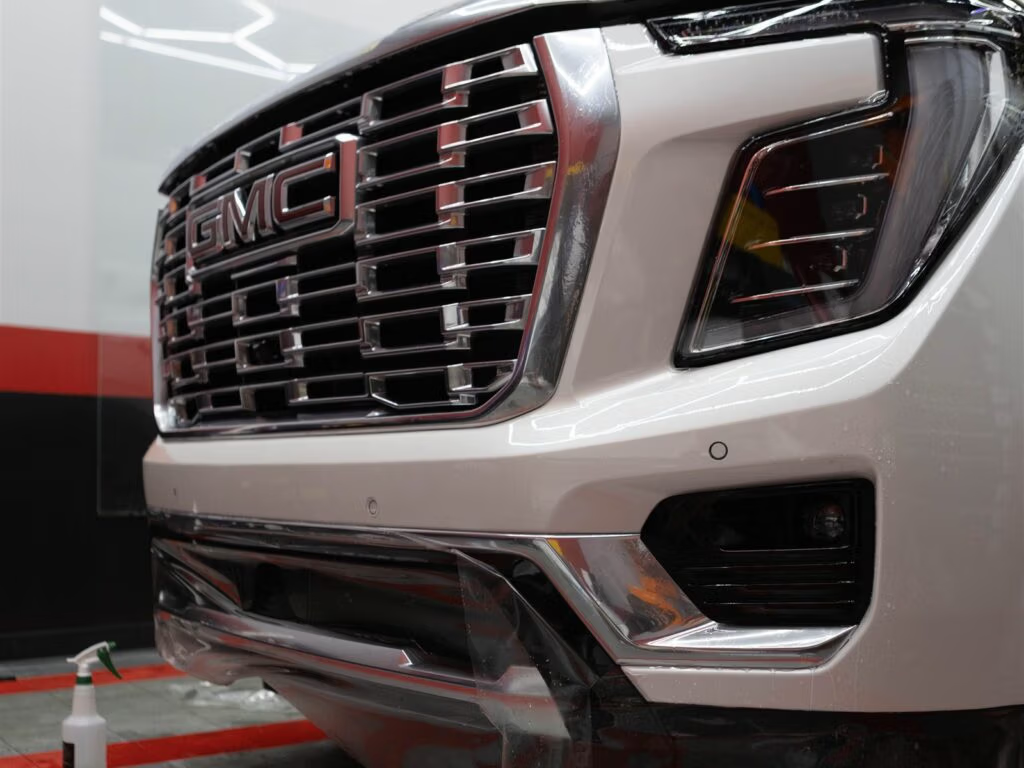
Paint protection film — PPF, or “clear bra” — is thermoplastic urethane (TPU), not vinyl. It is two to three times thicker: the X Guard PPF we install comes in 7.5, 8.5 and 10 mil builds. That thickness is the point. The film absorbs the impact of rocks, sand and road debris so the paint never feels it.
Modern PPF is built in layers, and each one has a job:
- A self-healing top coat that reflows with heat. Swirls, wash marks and light scratches disappear in the sun or under warm water — over and over.
- An aliphatic TPU core with anti-yellowing additives, so the film stays water-clear instead of going amber the way old clear bras did.
- A hydrophobic surface that sheds water and lets bug splatter and bird droppings wipe off instead of etching into the clear coat.
- An adhesive designed to release cleanly years later without lifting factory paint.
Clear PPF is optically clear, so once it is installed the car looks exactly as it did — usually a little glossier. X Guard carries a lifetime limited warranty; the STEK films we also install carry 12 years.
Wrap vs PPF vs color PPF, side by side
| Vinyl wrap | Clear PPF | Color PPF | |
|---|---|---|---|
| Material | Cast PVC vinyl | Clear TPU urethane | TPU urethane with a color layer |
| Thickness | ~3–4 mil | 7.5–10 mil | Full PPF thickness |
| Main job | Change the color | Protect the paint | Both |
| Stops rock chips | No | Yes | Yes |
| Self-healing | No | Yes | Yes |
| Color choice | 1,000+, incl. chrome & printed | Clear gloss or satin | ~300 shades |
| Typical life | 3–6 years | 10+ years, lifetime warranty (X Guard) | ~6-year outdoor rating |
| Install time | About 3 days | 1–7 days by package | About a week, full car |
| Cost | $2,500–$5,000+ full car | Depends on coverage | Highest of the three |
| Removable | Yes, cleanly | Yes, cleanly | Yes, cleanly |
The row that matters most is “stops rock chips”. If you remember nothing else: a wrap is about looks, PPF is about protection. Color PPF is the only one that does both in a single layer.
Clear PPF vs color PPF: which is better?
Neither is better across the board — they solve different problems. The real question is whether you want to keep your car’s color or change it.
Clear PPF is the better choice when…
- You like your factory color. Especially on expensive paint — tri-coat pearl whites, deep metallic reds, anything that is painful to match in a body shop.
- You only want the high-impact areas covered. Clear film can stop partway across a hood or fender and nobody will notice the edge. That is what makes partial front and full front packages possible — the most protection per dollar there is.
- You want the longest-lasting option. Clear PPF has the longest life and the strongest warranty of the three.
- You want easy repairs. If a panel gets damaged, we re-cover it in clear and it is invisible. With a colored film, a replacement panel has to match the original roll.
- You want satin without repainting. Satin clear film (X Guard Stealth or STEK DYNOmatte) turns gloss paint into a factory-looking satin finish while protecting it.
Color PPF is the better choice when…
- You want a new color and the car actually gets driven. Highway miles, gravel roads, the dump truck in front of you on I-85 — a vinyl wrap would be peppered with chips. Color PPF takes the hit.
- You want it to look like paint. Color PPF is thicker and glossier than vinyl with less surface texture, so it reads much closer to a real paint job. And because the top coat self-heals, it does not slowly go dull from wash marks.
- You want to keep the original paint for resale. The factory paint is protected the whole time. Take the film off and the car goes back to stock, in better shape than it would otherwise be.
What to know before choosing color PPF
- It costs more than a vinyl wrap and more than a clear front-end package — you are paying for color and protection at the same time.
- A color change means covering whole panels, so in practice it is a full-car job. You cannot stop halfway across a hood the way you can with clear.
- Door jambs and the inside edges of the doors stay the original color unless they are covered too. Ask about this before you book — the same is true of vinyl.
- The palette is smaller than vinyl’s. Around 300 shades is plenty for most people, but there is no true chrome and no printed graphics.
A simple test: if you would be happy with your car’s color for the next ten years, buy clear. If you are already tired of it, buy color — and choose color PPF over vinyl if the car spends its life on the highway.
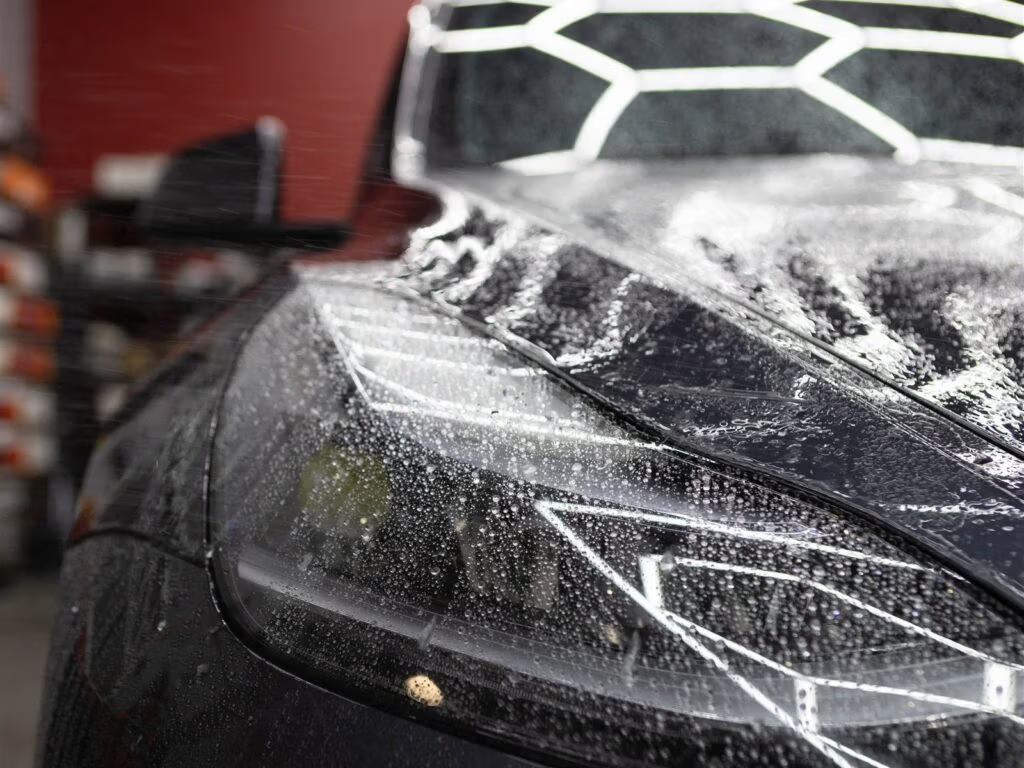
Your options, from a little to a lot
None of this is all-or-nothing. Most of our customers land somewhere on this list:
- Partial front — clear PPF. The front of the hood and fenders, the bumper and the mirrors. The entry point for chip protection, and right for a lot of daily drivers.
- Full front — clear PPF. The entire hood and fenders, bumper, mirrors and headlights. No film line across the hood, and the most popular choice for new cars.
- Track pack — clear PPF. Full front plus the other areas that take a beating — typically the A-pillars, the front edge of the roof and the rocker panels. For heavy highway miles and gravel roads.
- Full body — clear PPF. Every painted panel, in gloss or satin. The car stays its own color and is protected everywhere.
- Accents — vinyl or color PPF. Roof, hood, mirrors, stripes, chrome delete or a single accent panel. A big change in look for a fraction of a full color change.
- Full color change — vinyl wrap. The widest choice of colors and finishes at the lowest price for a completely new look.
- Full color change — color PPF. A new color and full protection in one layer.
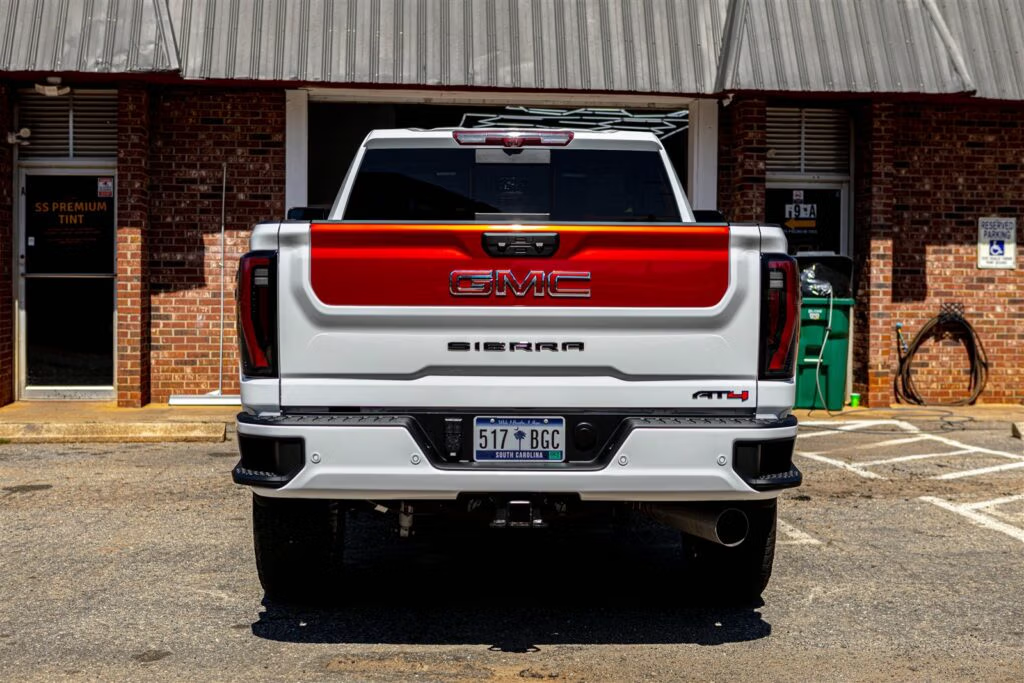
Whatever you choose, a ceramic coating can go on top. On a wrap or PPF it makes washing far easier, adds water beading and keeps the finish looking fresh. We wrote about whether that is worth the money here.
Benefits at a glance
Vinyl wrap
- The biggest selection of colors and finishes, including chrome, color-shift and printed designs
- The most affordable way to completely change the look of a car
- Fast — a full color change typically takes about three days
- Fully reversible, and it shields the paint from UV and light wear while it is on
- Ideal for leases, short-term looks and business branding
Clear PPF
- Stops rock chips, sand and road debris before they reach the paint
- Self-heals swirls and light scratches with heat
- Invisible — keeps the factory color and usually adds gloss
- Will not yellow; resists bug acid, bird droppings and road salt
- Lifetime limited warranty on X Guard, 12 years on STEK
- Protects resale value by keeping the original paint original
Color PPF
- A color change and real chip protection in one layer
- Self-healing finish that stays glossy instead of dulling
- Deeper, more paint-like look than vinyl
- Around 300 shades in gloss, satin, matte, metallic and color-shift
- Factory paint preserved underneath, and fully removable
So which one should you buy?
Choose a vinyl wrap if you want a new look at the best price, you want chrome, color-shift or a printed design, the car mostly lives in a garage, or you will probably want a different look in a few years.
Choose clear PPF if you love your car’s color and want to keep the paint perfect — a new car, expensive paint, or a daily commute on I-85 and I-26 behind gravel trucks. Start with a full front; go full body if you want everything covered.
Choose color PPF if you want both a new color and real protection, and you are keeping the car long enough for that to pay off. It is the most expensive option, but it is the only one that does both jobs at once.
Quick answers
Is color PPF just a thicker wrap?
No. A wrap is PVC vinyl; color PPF is urethane — the same material as clear paint protection film — with a color layer added. That is why it self-heals and stops chips, and vinyl does not.
Does a vinyl wrap protect the paint?
Partly. It blocks UV and keeps light scratches and grime off the paint, but it is too thin to stop rock chips. If protection is the goal, you want PPF.
Will a wrap or PPF damage my paint when it comes off?
Not on healthy factory paint removed by a professional — both come off cleanly. The risk is with poor-quality repaints, where the paint itself is not bonded properly to begin with.
Does clear PPF turn yellow?
Old clear bras did. Modern aliphatic TPU films with anti-yellowing additives, like X Guard, stay clear — and the manufacturer warranty covers yellowing.
Can I ceramic coat over a wrap or PPF?
Yes, and we recommend it. The coating makes the film easier to clean and adds water beading on top of the protection the film already gives.
How long will my car be at the shop?
About three days for a full vinyl color change. PPF runs from a day for a partial front up to around a week for full-body coverage.
Not sure which film fits your car?
Tell us the vehicle, how you drive it and what you want it to look like. We will give you a straight answer — including when a simple partial front is all you need.