


Most people who call us about ceramic coating already know they want one. What they do not know is the difference between a $299 coating and a $1,299 one — and whether the expensive one is just the cheap one with a longer warranty stapled on.
It is not. Here is what each level of ceramic coating actually includes, what else on the car can be coated besides the paint, what happens while the car is with us, and the aftercare that decides whether a coating lasts one year or eight.
Still deciding whether you want a coating at all? Start with Is Ceramic Coating Worth It? — it covers what a coating can and cannot do. This article picks up where that one ends.
Coating vs wax vs sealant, in one table
Before the packages, it helps to see where a coating sits next to the products it replaces. All three add gloss and make water bead. The difference is how they hold on to the paint — and therefore how long they last.
| Carnauba wax | Paint sealant | Ceramic coating | |
|---|---|---|---|
| How it attaches | Sits on top of the paint | Sits on top of the paint | Chemically bonds to the clear coat |
| Typical life | 4–8 weeks | 4–6 months | 1 to 8+ years, by package |
| Water beading | Good, fades fast | Good | Strong and long-lasting |
| Chemical & UV resistance | Low | Moderate | High |
| Upfront cost | Lowest | Low | Highest |
| Over five years | Dozens of reapplications | About ten reapplications | Applied once |
Wax is cheap per application and expensive per year. A coating is the reverse: you pay once, up front, and the protection does not wash off with the next rain.
The four packages
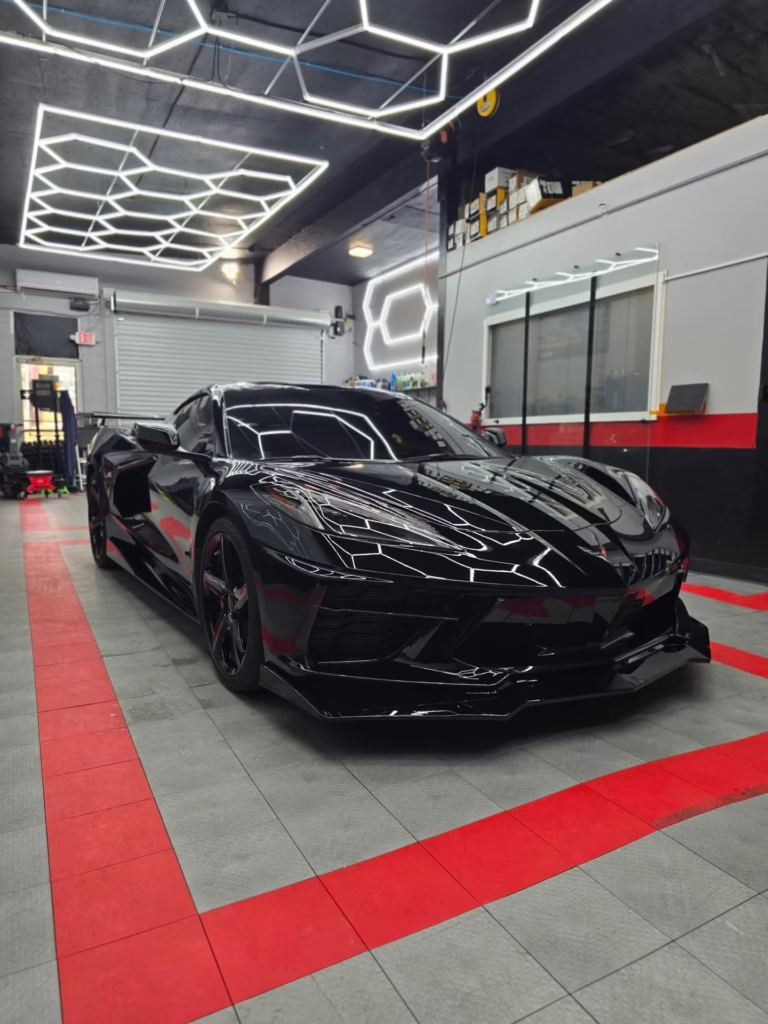
Every package starts from the same foundation: a full decontamination wash and a prep wipe so the coating can bond to clean clear coat. What changes as you move up is the coating chemistry, how long it is built to last, how much paint correction is included, and how much of the car gets coated.
Basic — from $299, about 1 year
A coating on the paint that makes it hydrophobic, adds UV protection and makes the car quick and safe to hand wash. The right call for a lease you are returning soon, a car you are getting ready to sell, or anyone who wants to try a coating before committing to a long-term one.
Plus — from $599, about 3 years
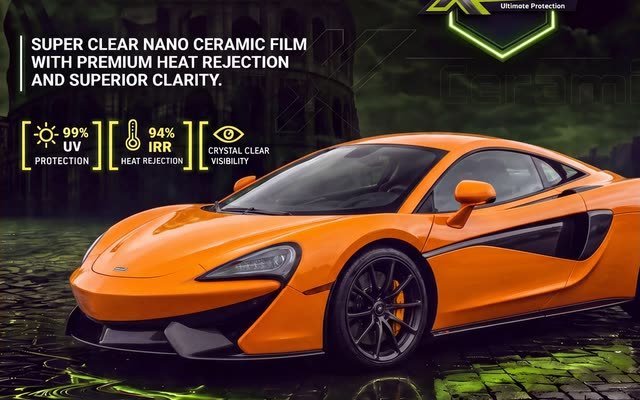
A longer-life coating with stronger water beading, chemical resistance against bird droppings, bug acid and tree sap, and better resistance to light swirl marks. A good fit for a daily driver you plan to keep for a few years.
Premium — from $799, about 6 years
Maximum hydrophobics, full chemical resistance and added scratch resistance on the paint, plus an annual inspection so we can check the coating and refresh it before it wears thin. This is where most new cars, dark paint jobs and vehicles that park outside belong.
Ultimate — from $1,299, 8 years to permanent
The complete package. It adds full paint correction before the coating goes on, coatings for the wheels, exterior trim and interior, and annual maintenance visits. This is for the car you plan to keep for a long time, a high-end vehicle, or one whose paint needs correcting anyway — because correction before coating is where most of the visible difference comes from.
| Basic | Plus | Premium | Ultimate | |
|---|---|---|---|---|
| Starting price | $299 | $599 | $799 | $1,299 |
| Built to last | About 1 year | About 3 years | About 6 years | 8 years to permanent |
| Hydrophobic + UV | Yes | Enhanced | Maximum | Maximum |
| Chemical resistance | — | Yes | Full | Full |
| Full paint correction | — | — | — | Included |
| Wheels, trim & interior | — | — | — | Included |
| Yearly check-up | — | — | Inspection | Maintenance |
Prices are starting points. They move with vehicle size and, above all, with paint condition: a new car needs little more than a wash and decontamination, while a five-year-old black SUV that has lived on automatic car washes needs correction first. You get an exact quote for your vehicle before any work starts.
It is not just for paint
A coating bonds to more than clear coat. The same idea — a hard, slick, water-shedding layer — works almost everywhere on a vehicle:
- Wheels. Brake dust is hot, sharp and corrosive, and it bakes onto bare wheels. On coated wheels it rinses off with water and a soft brush instead of harsh acid cleaners.
- Exterior trim. Unpainted black plastic fades to grey in the sun. A trim coating keeps it dark for years instead of weeks.
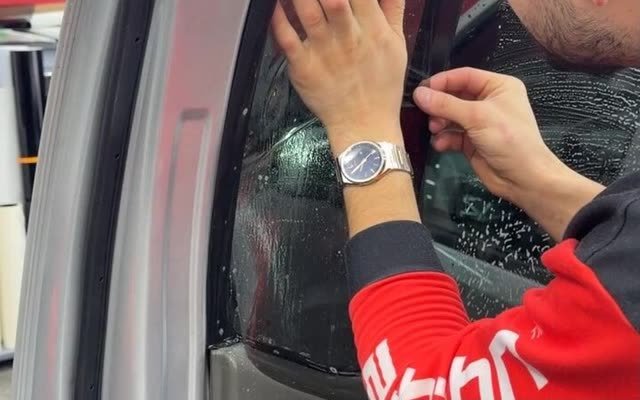
- Glass. A coated windshield sheds rain at highway speed — you notice it most on I-85 at night in a summer storm. Ask about it when you book window tint.
- Interior. Leather, vinyl and fabric coatings make spills bead up instead of soaking in. Worth it with kids, dogs or light-colored seats — more in our interior detailing guide.
- PPF and wraps. A coating over paint protection film or a vinyl wrap makes the film easier to clean and keeps filmed and unfilmed panels behaving the same. More on that in Wrap vs PPF.
- Boats and aircraft. The same chemistry protects gelcoat and aircraft paint from sun, water spotting and salt. We coat those too.
What happens while the car is with us
Most coatings take one to three days, depending on the paint and the package. Here is where that time goes:
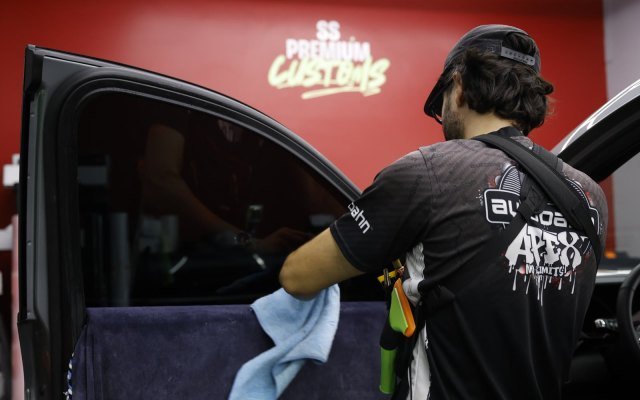
- Wash and decontamination. A hand wash, iron remover and clay bar to pull out everything bonded to the surface — rail dust, sap, overspray.
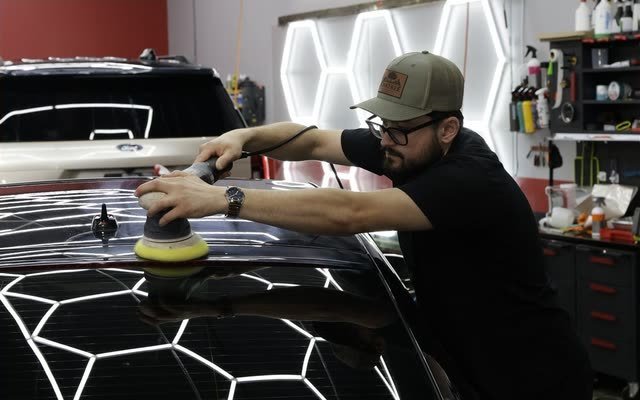
- Paint correction. Polishing out swirls, light scratches and oxidation. The coating locks in whatever is underneath it, so this step decides how the car looks for years.
- Surface prep. A panel wipe strips polishing oils and residue so the coating bonds directly to clean clear coat.
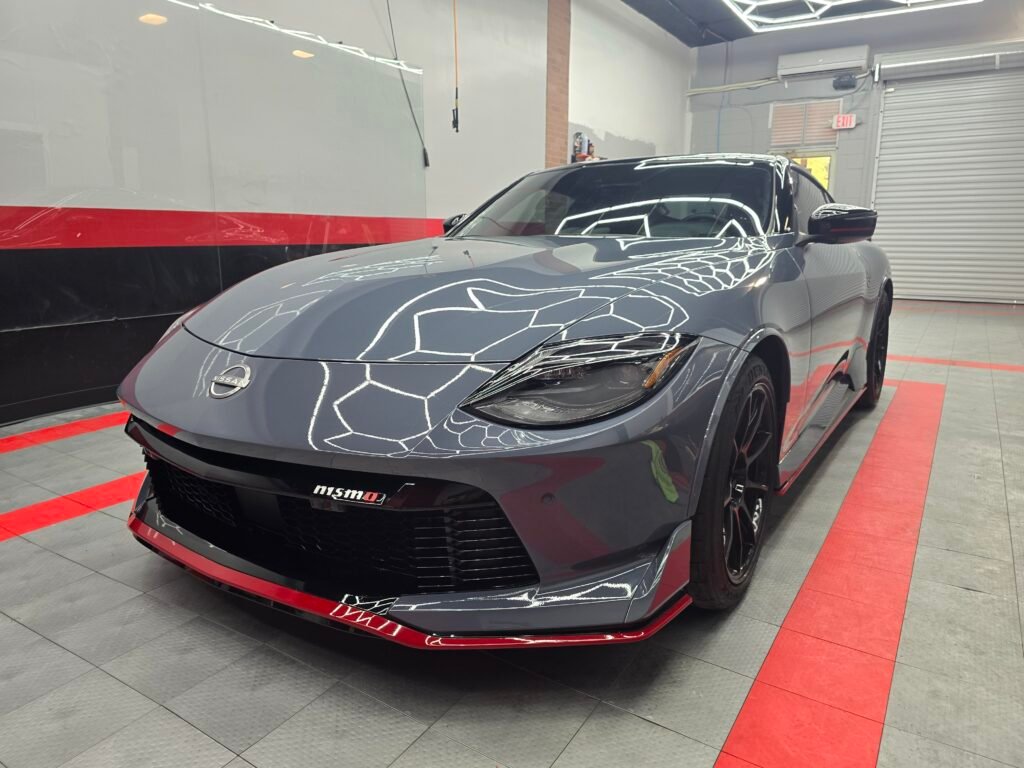
- Application. The coating goes on panel by panel indoors and is leveled before it flashes, so there are no high spots.
- Curing and inspection. The coating hardens, then we check the whole car under inspection lighting for even coverage.
- Delivery. You pick the car up with care instructions — the same ones below.
The first week: let it cure
When you pick the car up, the coating is dry to the touch, but it keeps hardening for days afterward. The first week is when it is most vulnerable:
- No washing for the first 7 days — no soap, no car washes, no detail sprays.
- Keep it dry for the first 24 to 48 hours if you can. If it does get rained on, that is fine — pat it dry gently with a clean microfiber instead of wiping hard.
- Remove bird droppings right away, gently, with water and a soft microfiber. Do not let them bake in the sun.
- Park in the shade or a garage whenever possible.
Washing a coated car the right way
A coating makes washing faster and safer. It does not make washing optional. How you wash is the single biggest factor in how long the coating lasts:
- Hand wash every one to two weeks with a pH-neutral car shampoo, two buckets and a soft wash mitt.
- Skip brush car washes completely. Spinning brushes put swirls into coated paint and wear the coating down fast. Touchless washes are gentler on the surface but use strong detergents, so save them for emergencies.
- Wash in the shade, on a cool panel. Upstate summer sun dries soap and water onto the paint before you can rinse it, and that is where water spots come from.
- Dry with a plush microfiber towel or a blower — not a chamois, not a bath towel.
- Do not wax or polish it. Wax covers up the coating’s own water behavior, and polish removes the coating.
- Use a ceramic boost spray every few months to refresh the slickness and the beading.
- Get bugs, sap and droppings off quickly. The coating buys you time, not immunity.
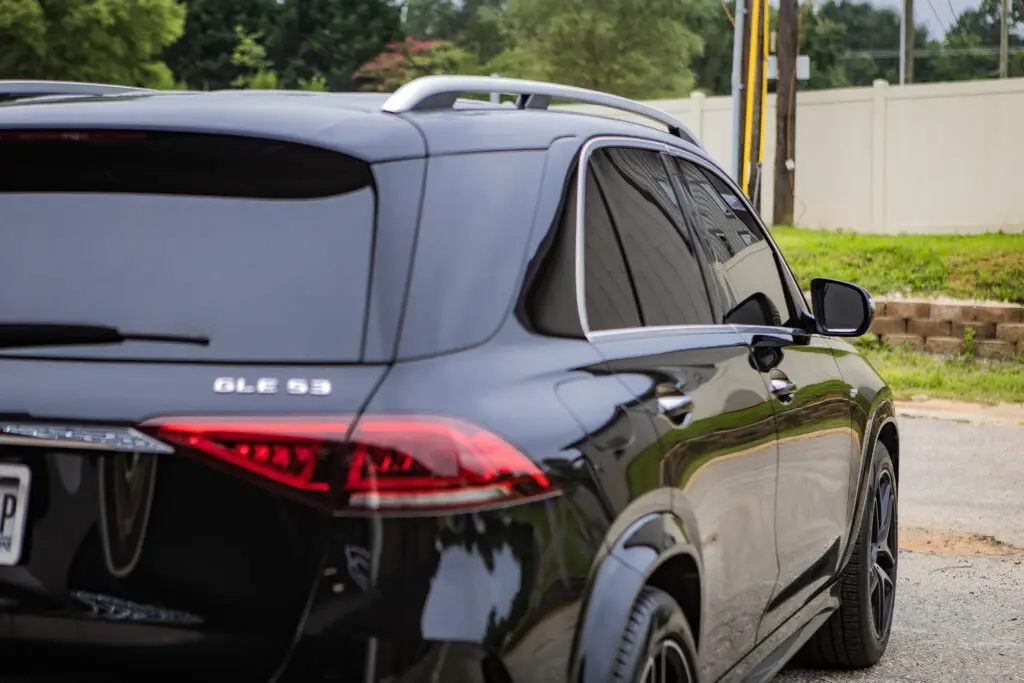
How to tell it is still working: after a wash, water should form tight, round beads and sheet off when you rinse. If it starts lying flat on a panel, the surface usually needs a decontamination wash and a boost — not a new coating. On Premium and Ultimate, that is what the yearly visit is for.
Benefits at a glance
- Strong water beading, so the car stays cleaner and dries faster
- UV protection against fading and oxidation in South Carolina sun
- Resistance to bird droppings, bug acid, tree sap and pollen
- Deep gloss that lasts years instead of weeks
- Washing takes a fraction of the time, and no more waxing
- Coatings for wheels, trim, glass and interior — not just paint
- A well-kept finish that helps resale and trade-in value
Which package should you choose?
Basic if the car is leaving soon — a lease return, a car going up for sale, or a first try at a coating.
Plus for a daily driver you will keep for a few years and wash by hand.
Premium for a new car you plan to keep, dark paint, or a vehicle that lives outside in the sun, pollen and sap.
Ultimate for a long-term keeper or a high-end car, or whenever the paint needs correcting anyway — at that point the correction is the real upgrade, and the coating locks it in.
If rock chips are on your mind too, pair the coating with paint protection film on the front end. The film takes the impacts; the coating goes over the whole car, film included.
Quick answers
How long will my car be at the shop?
One to three days, depending on paint condition and the package. You get the timeline before we start.
Can I take a coated car through a car wash?
Never a brush wash. A touchless wash in a pinch is fine, but regular hand washing is what keeps a coating performing.
Will a coating hide scratches?
No. It locks in whatever is underneath, which is why paint correction comes first.
Does a coating stop rock chips?
No — that is the job of PPF. A coating handles gloss, easy washing and chemical and UV protection.
Can you coat a car that already has PPF or a wrap?
Yes, and it is one of the best things you can do for the film.
Do I have to come back?
Basic and Plus need nothing but good washing. Premium includes a yearly inspection, and Ultimate includes yearly maintenance.
Want an exact price for your car?
Tell us the year, make and model and how the paint looks today. We will tell you which package fits and what the prep involves — before any work starts.