



Ceramic coating is the most oversold product in this industry. It is also genuinely good — when you understand what you are buying. The gap between those two sentences is where most of the disappointment lives.
So here is the honest version from a shop that installs it: what a coating does, what it does not do no matter who tells you otherwise, and when it is actually worth the money.
What a ceramic coating actually is
A coating is a liquid polymer that chemically bonds to your clear coat and cures into a hard, glass-like layer a few microns thick. It is not a wax sitting on top of the paint — it becomes a sacrificial surface above it.
That layer does three things well:
- It is strongly hydrophobic. Water beads tight and sheets off, taking most road grime with it.
- It resists chemicals and UV. Bird droppings, bug splatter, tree sap and industrial fallout get a buffer before they reach your paint, and the clear coat oxidises more slowly.
- It adds depth of gloss. Properly prepped and coated paint has a wet, hard look that wax cannot hold for more than a few weeks.
What it does not do
This is where the marketing gets dishonest, so let us be blunt.
A ceramic coating will not stop rock chips. Not at any price, not at any hardness rating. A coating is microns thick; a stone hitting your bumper at 60 mph does not care. If rock chips are the problem you are trying to solve, you want paint protection film, which is a physical layer measured in mils, not a chemical one measured in microns.
It also will not prevent swirl marks. You will read “9H hardness” everywhere — that is a pencil hardness scale measured on a flat test panel, and it does not translate to scratch-proof paint. A coating raises the threshold a little. An automatic car wash with spinning brushes will still put swirls in it.
And it does not mean you stop washing the car. It means washing gets dramatically easier and safer, because dirt is not bonding directly to the clear coat. People who think a coating replaces maintenance end up with a dirty car that is harder to fix than an uncoated one.
The part nobody wants to hear: prep is the product
A coating is transparent and permanent-ish. Whatever the paint looks like when the coating goes on is what it will look like, locked in, for years.
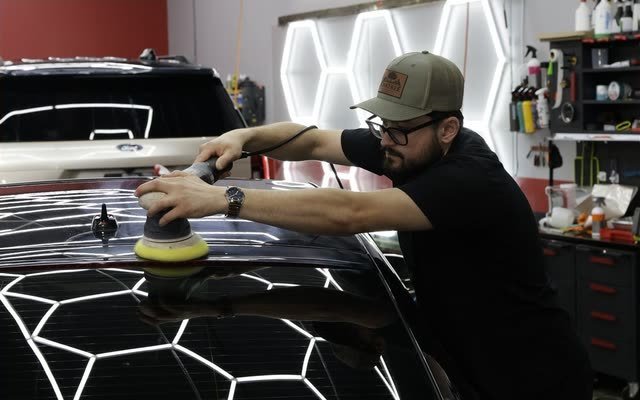
That means the real work is what happens before the bottle is opened: wash, decontamination, clay, iron removal, then paint correction to remove the swirls and marring already in the clear coat. On a used car that is the overwhelming majority of the labour and the cost.
If someone quotes you a very cheap coating, this is the step they are skipping. You get a shiny seal applied over existing defects — and now those defects are sealed under a layer that has to be polished off to fix. A cheap coating is worse than no coating.
How long does it really last?
Durability is real but it is conditional, and the condition is maintenance rather than the product. We offer four tiers — roughly one, three and six years, plus an eight-year-to-permanent option — and the difference between them is the chemistry, how much paint correction is included and how much of the car gets coated. Here is what each one includes.
What shortens any of them:
- Automatic car washes with brushes — the fastest way to wear a coating out.
- Harsh or high-pH detergents that strip the hydrophobic layer.
- Letting bird droppings and sap bake on in the sun for days. The coating buys you time, not immunity.
- Parking outside permanently in full sun. It still helps enormously; it just works harder.
Our longest tiers include a yearly inspection or maintenance visit — that is how any honest shop can stand behind them. A coating nobody ever checks is a coating nobody can warrant.
When it is worth it
Worth it:
- A new or nearly new car, where prep is minimal and you are locking in paint that is already good.
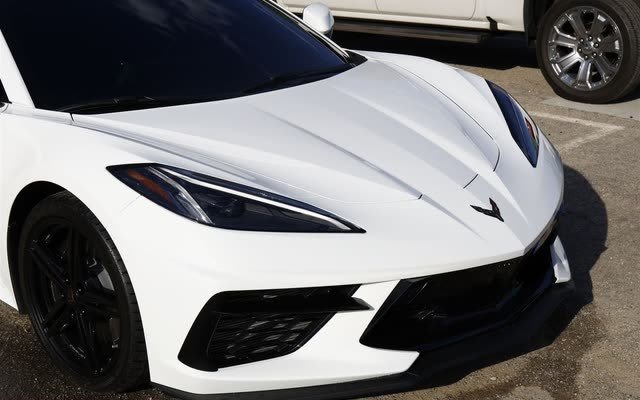
- A dark or black car — swirls and water spots show worst on dark paint, and a coating is the best defence short of film.
- A car that lives outside, in sun, pollen and tree sap. The Upstate supplies all three generously.
- Anyone who washes their own car and wants it to take twenty minutes instead of an hour.
- A vehicle you intend to keep for years. The maths improves the longer you own it.
Probably not worth it:
- A lease you are returning in a year.
- A work truck that lives on a job site and gets scraped regardless.
- A car with badly neglected paint, unless you are also paying for the correction — and at that point the correction is the real purchase.
- Anyone who only runs it through automatic brush washes. You will undo it.
Coating, PPF, or both?
They solve different problems and the right answer is often both, in a specific order.
| Problem | Solution |
|---|---|
| Rock chips on the front end | Paint protection film |
| Gloss, easy washing, chemical and UV defence | Ceramic coating |
| Both, properly | PPF on the impact areas, coating over the whole car including the film |
Coating over the top of PPF is the common premium setup: the film takes the physical hits on the nose and mirrors, and the coating gives the whole car the same hydrophobic, easy-clean surface so the filmed and unfilmed panels behave alike.
The one-sentence answer
A ceramic coating is worth it if you want your paint to stay glossy and easy to clean for years and you are willing to hand-wash it — and it is not worth it if you expected it to stop stones or replace washing. Anyone who tells you otherwise is selling, not advising.
Want a straight answer for your car?
Send a couple of photos in daylight and tell us the age of the paint. We will tell you what prep it needs and whether a coating is the right spend — including when it is not.