
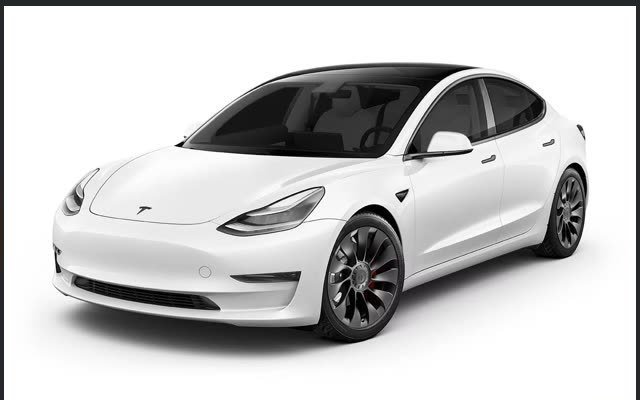
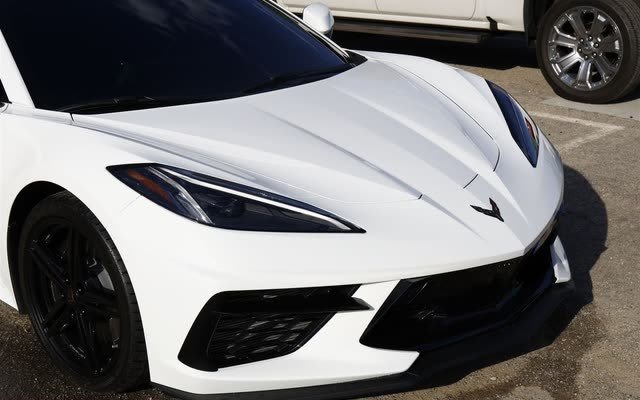
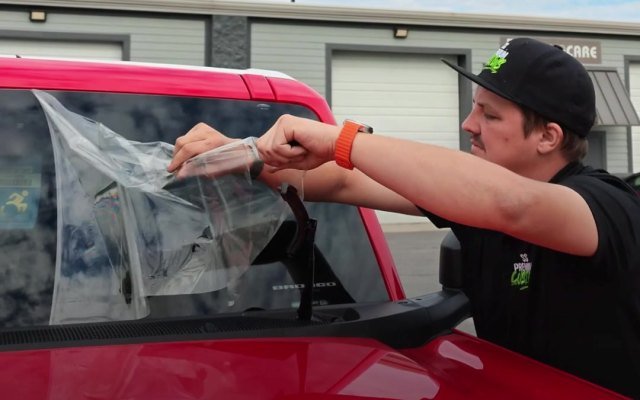
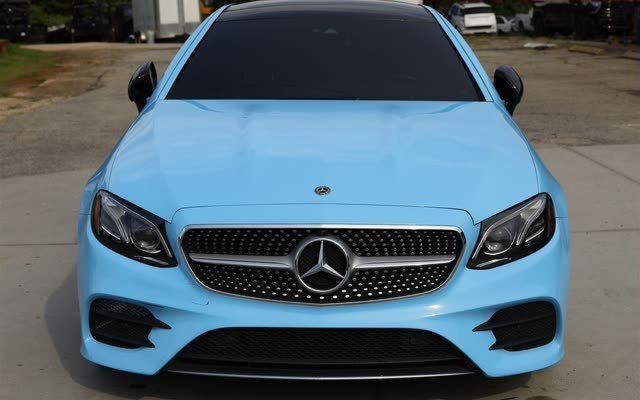


“I want 20.” “Give me limo.” “Just do factory match.” People arrive with a number in their head and no clear picture of what it looks like on their own car — and the number means something slightly different on every vehicle.
Here is what each percentage actually looks like, what it does for you, and which ones you can legally run in South Carolina.
First: the number is backwards from what people assume
VLT stands for Visible Light Transmission. It is the percentage of light that gets through the glass. So:
- 70% VLT = 70% of light passes through = very light film
- 5% VLT = only 5% gets through = almost black
Lower number, darker film. Nearly everyone gets this the wrong way round the first time.
There is a second thing that trips people up. Most cars already have slightly tinted glass from the factory — typically around 70–80% VLT on the front doors and often much darker behind the B-pillar on SUVs. The law and the meter measure the combined result. Put a 35% film on 75% factory glass and the window measures about 26%, not 35%. This is exactly how people end up accidentally illegal.
In South Carolina the legal minimum is 27% VLT on the front side windows, the side windows behind the driver and the rear window. Because of the factory-glass effect above, 35% is the shade we recommend — it leaves margin so a meter reading does not put you over. Full detail in our guide to the SC tint law.
Every shade, and what it is for
70% — you cannot really see it
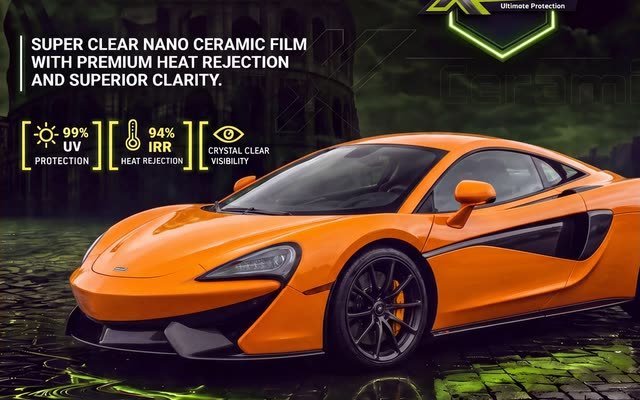
Looks like untinted glass to almost everyone. No privacy, no visible change in appearance. So why fit it? Because with the right film, 70% is where you get heat rejection without darkness: our X Clear and X Pro Ceramic both reject 94% of infrared at this shade. It is the only shade that is legal on a windshield as a full film, and it is the answer for anyone who wants a cooler car but cannot or does not want to go dark.
50% — a light, clean look
Noticeable side by side with untinted glass, but subtle. Cuts glare meaningfully, keeps night visibility essentially unchanged. A good choice for drivers who are nervous about reversing in the dark, and for anyone who wants the car to look finished rather than tinted.
35% — the one we fit most
The sweet spot in South Carolina. Clearly tinted, gives real privacy in daylight, still easy to see out of at night. Legal with margin. If you are not sure what you want and you drive a sedan, this is the recommendation nine times out of ten.
20% — dark, and not legal here
This is the shade people picture when they say “tinted”. Strong privacy, you cannot easily see occupants from outside in daylight. It is below South Carolina’s 27% limit on a passenger car. There is one important exception — on many SUVs and vans the glass behind the driver is not covered by the limit at all, which is why you see plenty of legal dark SUVs on the road. Ask us about your specific vehicle before assuming either way.
15% and 5% — limo
5% is the true limo shade: at night you are largely relying on mirrors on those windows. Both are well below the legal limit for side and rear glass on a car. Where they legitimately get used is qualifying SUVs and vans behind the driver, private vehicles, and show builds. We will fit them — we will also tell you plainly where they are and are not legal.
Quick reference
| VLT | Look | Privacy | Night visibility | Legal on SC car? |
|---|---|---|---|---|
| 70% | Invisible | None | Unchanged | Yes |
| 50% | Light | Slight | Unchanged | Yes |
| 35% | Clearly tinted | Good in daylight | Good | Yes |
| 20% | Dark | Strong | Noticeably reduced | No* |
| 15% | Very dark | Very strong | Poor | No* |
| 5% | Limo | Total | Mirrors only | No* |
*Not legal on the side or rear windows of a passenger car. May be legal behind the driver on SUVs, vans and similar vehicles that meet the statute’s definition of a multipurpose passenger vehicle. We check this per vehicle before we cut film.
Darkness is not how you get a cool car
Worth repeating because it saves people money: the shade controls how the car looks. Heat is infrared, and infrared rejection depends on what the film is made of, not how dark it is.
Our Crystal carbon film rejects about 20% of infrared — at 50% and at 5% alike. Going darker does not make it cooler. Meanwhile X Ceramic at a light 50% rejects 86%. The light ceramic beats the dark carbon on heat by a wide margin.
So decide the two things separately: pick the shade for how you want the car to look and what is legal, then pick the film for how much heat you want gone.
Just look at it instead
Descriptions only go so far. Every film page on this site has a live preview that puts each shade on a car and shows the heat numbers for that exact combination, day and night. Pick the shade, see it, then compare films at the same shade:
- Crystal — carbon, 5 shades, best value
- X Ceramic — nano-ceramic, 6 shades, up to 88% IR
- X Pro Ceramic — multi-layer, 6 shades, up to 96% IR
- X Clear — 70% only, windshield-legal, 94% IR
Not sure which shade suits your car?
Tell us the year, make and model. Factory glass differs a lot between vehicles, and on some of them the back glass follows a different rule entirely.