








Most people clean the inside of their car when it finally bothers them — a smell, a sticky cupholder, crumbs you can see from the driver’s seat. By then the damage is already happening. Grit has worked into the carpet, body oil has soaked into the seat bolsters, and the denim mark on the light-colored seat has had a month to set.
The fix is not one big clean a year. It is a small one every week, a deep interior detail a few times a year — and, if you want the easy version, a ceramic coating on the seats so most of the mess wipes straight off.
Short version: 10 to 15 minutes of interior care a week keeps the cabin clean, keeps the leather from wearing and cracking, and stops smells before they start. A full interior detail every three to four months does the deep work. An interior ceramic coating makes both of them faster.
Why every week, and not “when it looks dirty”
The things that wear out an interior are small, and they work slowly. Each one is easy to remove after a week and hard to remove after a season:
- Grit acts like sandpaper. Sand, dirt and road grime come in on shoes and clothes. In the carpet it grinds the fibers every time a foot moves; in the creases of a leather seat it scuffs the surface every time you slide in and out.
- Body oil, sweat and sunscreen build up on leather. Seat bolsters, armrests and the steering wheel collect them first. Over time they break down the leather’s protective topcoat — that is what turns seats shiny, dark and eventually cracked.
- Dye transfer sets in. Blue jeans rub color onto light seats. A week-old mark wipes off. A months-old one often needs a dedicated cleaner, and sometimes it never fully comes out.
- Spills and crumbs turn into smells. Coffee, soda and kids’ snacks end up in seams and under the seats. In a closed car on a hot Upstate afternoon, that is how a cabin starts to smell.
- Pollen and dust pile up. Every spring the Upstate turns yellow, and plenty of it comes in through the doors and vents and settles on the dash, the vents and the carpet.
- The things you touch most get cleaned least. Steering wheel, shifter, door handles, screen, cupholders — you touch them on every drive.
- The sun bakes it all in. Heat and UV dry out leather and dash plastics and cook dirt into the surface. Window tint cuts the UV; regular cleaning removes what the sun would otherwise bake on.
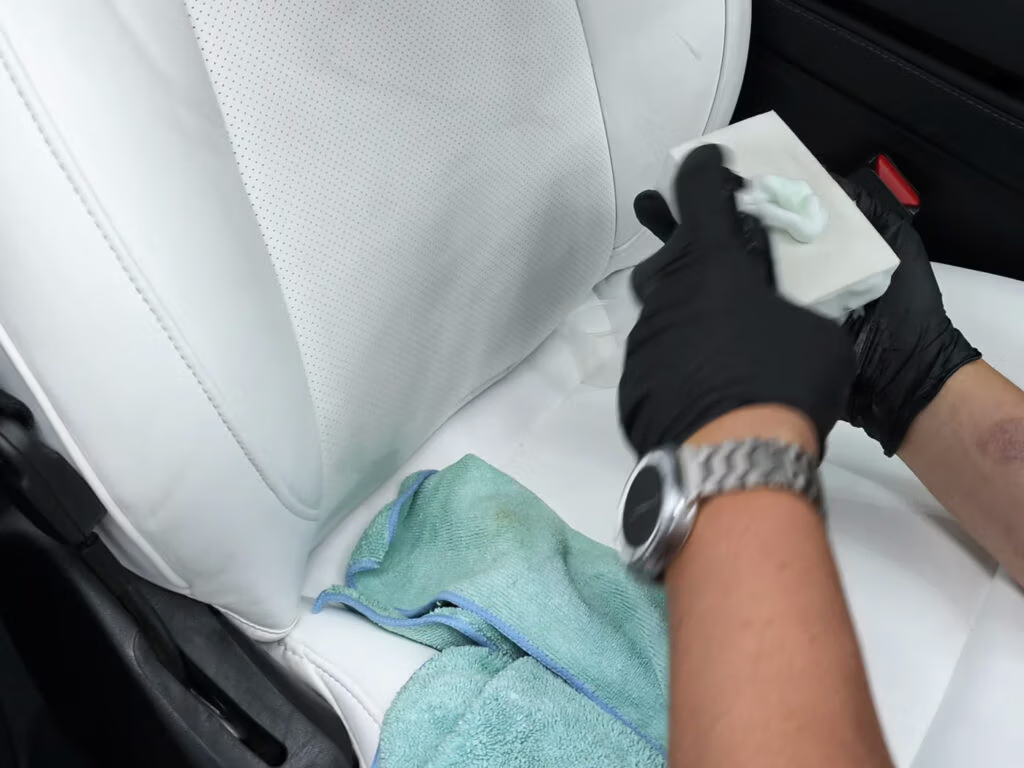
The 15-minute weekly routine
You do not need a shop for this. You need a vacuum, two or three clean microfiber towels and a pH-neutral interior cleaner:
- Trash and loose items out. Bottles, receipts, wrappers and anything with food in it go first.
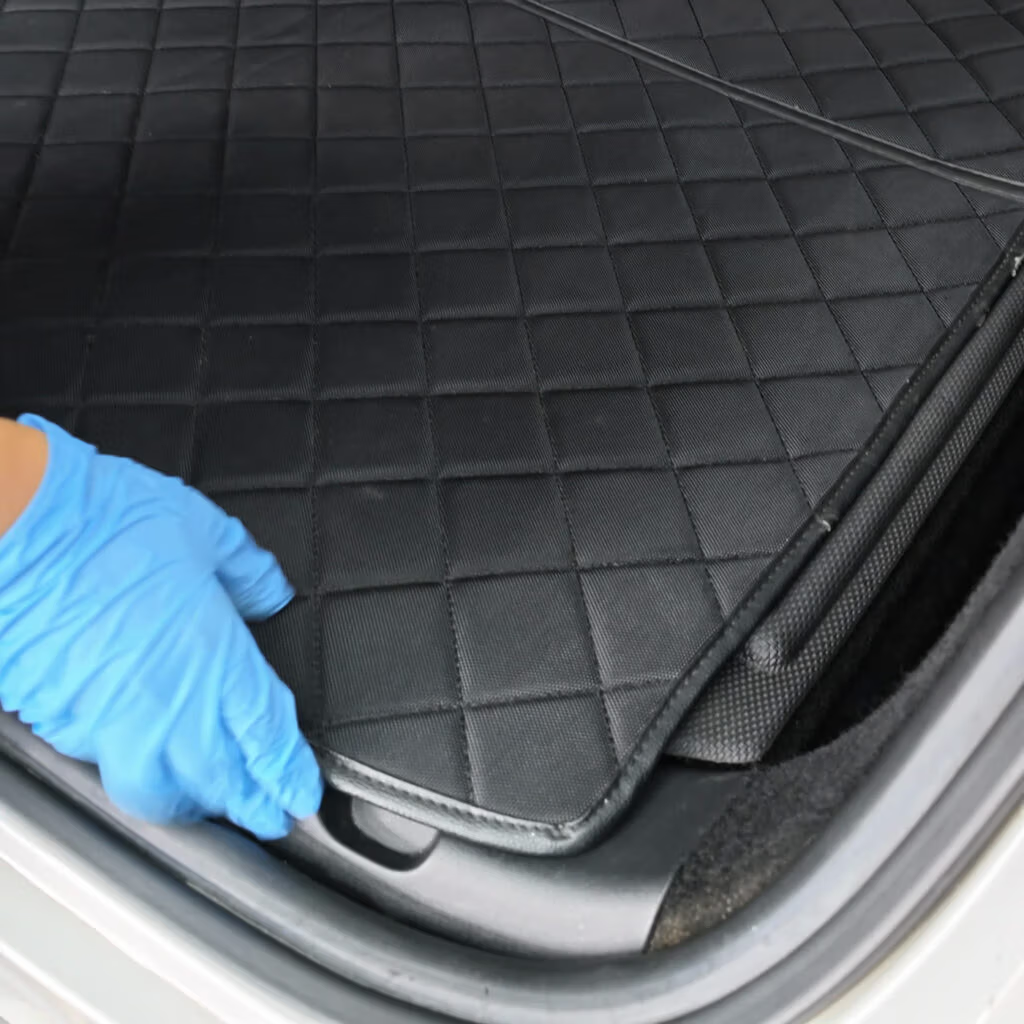
- Mats out and shaken. Rubber and all-weather liners get rinsed with a hose; carpet mats get vacuumed on both sides.
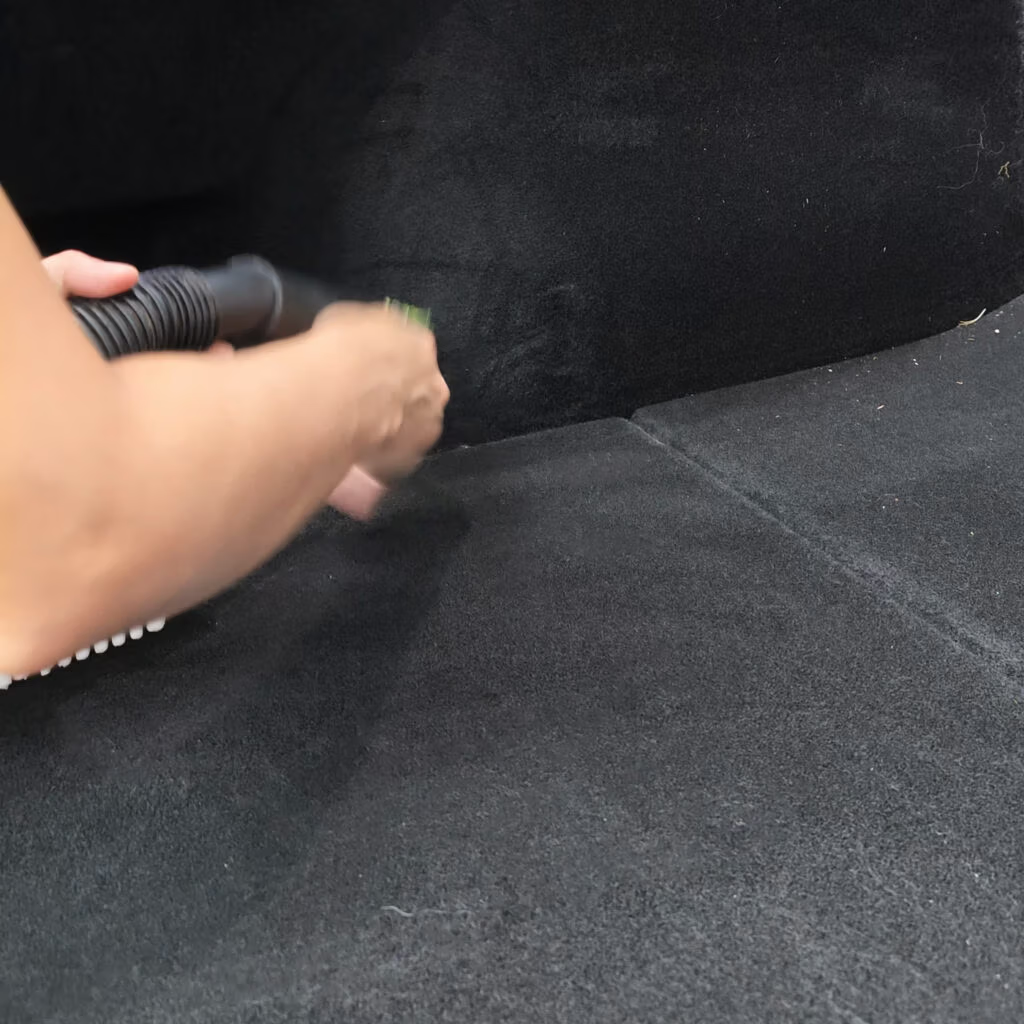
- Vacuum the floor, the seats and the seams between the cushions, then the trunk. A stiff brush on the carpet lifts what the vacuum alone misses.
- Wipe the touch points. Steering wheel, shifter, door handles, window switches, cupholders and console. Spray the towel, not the surface — never spray cleaner straight onto buttons or screens.
- Wipe the seats. On leather, a damp microfiber or a pH-neutral leather cleaner. Give the driver’s seat bolster the most attention; it takes the most wear.
- Screens and inside glass last, with a clean, dry towel, so you are not spreading the dust you just loosened.
What not to use on an interior
- Household all-purpose cleaners and degreasers. They are too harsh for leather and screen coatings and dry the surface out over time.
- Melamine “magic” sponges on leather. They clean by abrading — on a seat, that means sanding off the topcoat.
- Glossy silicone dressings on the steering wheel, pedals or seats. They make surfaces slippery and attract dust.
- Baby wipes or alcohol wipes as a routine cleaner. Fine in an emergency, but they leave residue or dry the surface out when used every week.
Weekly upkeep vs a full interior detail
The weekly routine keeps things from building up. A full interior detail removes what the weekly routine cannot reach — dirt pressed deep into the carpet and seat foam, last month’s stain, the dust inside the vents:
| Weekly upkeep | Full interior detail | |
|---|---|---|
| How often | Every week | Every 3–4 months |
| Vacuuming | Floors, mats, seats and trunk | Everything, including seams, vents and under the seats |
| Leather and vinyl | Wipe-down | Deep cleaning and conditioning |
| Cloth seats and carpet | Vacuum and brush | Steam cleaning and extraction |
| Stains | Blot spills right away | Spot and stain treatment |
| Vents and seams | Quick dust | Compressed-air detail |
| Floor mats | Shake out or rinse | Shampoo and extraction |
| Who does it | You — or us, with SS Access | Us — SS Revive |
For most daily drivers, a full interior detail every three to four months is a good rhythm. With kids, dogs, light-colored leather or a work truck, go more often.
How we handle it at the shop
If you would rather have it done for you, there are two ways to do it.
Every week: SS Access membership — $219 a month
Unlimited quick details, with a full interior and exterior refresh on every visit: seats, carpets and trunk vacuumed, the dash, console and door panels wiped down, interior glass and mirrors cleaned, and a light deodorizer. You also get priority scheduling and discounts on add-ons and other services, with no contract — cancel anytime. If you want a clean car every week without doing it yourself, this is what it is built for.
A few times a year: SS Revive — $349
Our most popular full detail. Inside the car it adds leather and vinyl deep conditioning, steam cleaning and extraction of the seats, carpets and upholstery, spot and stain treatment, a compressed-air detail of the vents and seams, and floor mat shampoo and extraction — on top of everything in SS Refresh ($229). SUVs are +$25, trucks +$40 and vans +$50. Pet hair removal and heavy stain removal are available on request. See every detailing package.
Interior ceramic coating: protection that makes cleaning easy
An interior ceramic coating is a thin, clear protective layer made for the inside of a car, with separate formulas for leather, for fabric and carpet, and for plastic and vinyl trim. On paint, a coating is about gloss and chemical resistance. Inside, it does two jobs: it keeps dirt and liquids on the surface, and it protects the leather from the oil, dye and UV that wear it out.
What it does for leather
- Spills bead up instead of soaking in. Coffee, soda and water sit on top long enough for you to wipe them off.
- Dye transfer wipes off. Color from denim stays on the coating instead of working into the leather — the main reason it is worth it on white, beige and light-grey seats.
- Body oil and sunscreen stay on top. They come off with a damp towel instead of breaking down the leather’s own topcoat.
- UV protection slows fading and drying on seats and trim that sit in the sun.
- Weekly cleaning gets faster. Most of the routine above turns into a quick wipe.
- The factory look and feel stay. A good leather coating does not make seats shiny, slippery or sticky.
It works the same way on synthetic leather, which many new cars — Teslas included — use instead of hide.
| Uncoated leather | Coated leather | |
|---|---|---|
| Coffee or soda spill | Can soak in and stain | Beads up and wipes off |
| Dye from jeans | Works into the surface over time | Stays on top and wipes off |
| Body oil and sunscreen | Break down the topcoat | Sit on the coating |
| Sun | Fades and dries out over time | Added UV protection |
| Weekly cleaning | Cleaner, plus scrubbing in the creases | A damp microfiber wipe |
Fabric, carpet and trim
On cloth seats and carpet, a fabric coating makes liquids bead on the surface instead of wicking straight into the foam, which gives you time to blot a spill before it becomes a stain. On plastic and vinyl trim, the coating helps keep dust from sticking and adds UV protection without the greasy shine of a dressing.
What it will not do
- It does not make leather indestructible. Cuts, punctures, pet claws and heavy abrasion still damage it.
- It does not replace cleaning. A coated interior still gets the weekly wipe — it just takes a fraction of the time.
- It does not fix damage that is already there. Cracks, worn color and old stains have to be dealt with first, because the coating seals in whatever is underneath it.
- It wears fastest where friction is highest — the driver’s seat bolster and the steering wheel — so those are the first spots to check.
How we apply it
- Deep clean. Leather is cleaned with a pH-neutral leather cleaner and a soft brush; fabric and carpet are steam-cleaned and extracted.
- Dry and prep. Every surface dries completely and gets a prep wipe, so the coating bonds to clean material instead of old conditioner or residue.
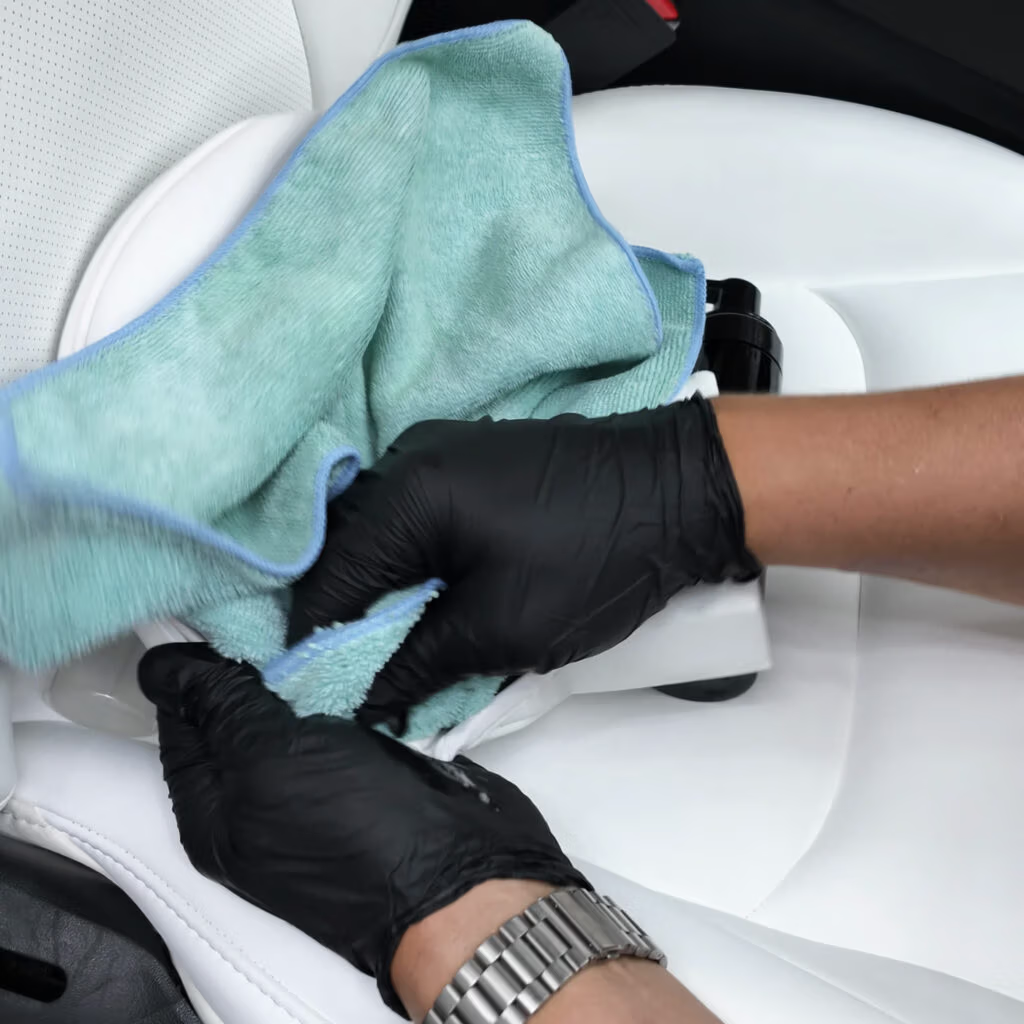
- Application. The coating goes on by hand, one panel at a time, and is buffed level with a clean microfiber.
- Cure. We tell you how long to keep spills and cleaners off the coated surfaces — it depends on the product.
Interior coating is included in our Ultimate ceramic coating package (from $1,299), together with full paint correction, coatings for the wheels and trim, and annual maintenance visits. If you only want the inside protected, ask us when you book a detail.
Caring for a coated interior
- Wipe it weekly with a damp microfiber or a pH-neutral interior cleaner.
- Blot spills right away. The coating buys you time, not unlimited time.
- Skip harsh all-purpose cleaners, degreasers and alcohol. They wear the coating down.
- Skip heavy leather conditioners. On coated leather they sit on top and leave the seats greasy.
- Keep vacuuming the seams and creases so grit does not grind the coating away.
Doing the outside too? If the paint is getting a ceramic coating, the interior can be done in the same visit. And if your seats are fading in the sun, look at ceramic window tint — it blocks UV before it ever reaches the leather.
Quick answers
Does my interior really need attention every week?
The weekly routine, yes — 10 to 15 minutes. A full deep detail, no: every three to four months is enough for most cars.
Can I use household cleaners or baby wipes on leather?
Not as a habit. Household cleaners are too harsh, and wipes leave residue. A pH-neutral interior or leather cleaner and a microfiber towel are all you need.
Do I need to condition my leather every week?
No. Clean it weekly and condition it during a deep detail. Too much conditioner leaves seats greasy, and greasy seats hold on to dirt.
Will an interior coating change how my seats feel?
It should not. A quality leather coating keeps the factory finish and the soft feel — no shine and no slippery surface.
Does it work on cloth seats?
Yes. Fabric coatings are made for cloth and carpet: liquids bead up instead of soaking in, so you can blot them before they stain.
I have kids and a dog. Is it worth it?
That is where it pays off most. Spills, crumbs and muddy paws are exactly what a coating is for — and when hair has worked deep into the carpet, we offer pet hair removal on request.
Want the inside of your car back to new?
Tell us the year, make and model and what the interior looks like today. We will tell you whether a weekly membership, a deep detail or an interior coating makes the most sense — before any work starts.