



You pick the car up, the film looks perfect in the bay, and by the time you get home there are little cloudy patches and what look like water bubbles. Nothing has gone wrong. That is the film curing, and it is the single most common reason people call a tint shop in the first week.
Here is what is happening, how long it takes, and the short list of things that genuinely can ruin a fresh install.
Why there is water under your tint
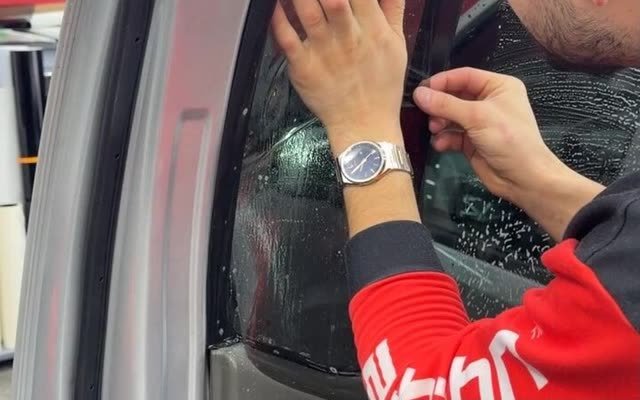
Window film is applied wet. The installer floods the glass with a slip solution so the film can be positioned, then squeegees out as much of it as possible. A thin layer always stays behind, trapped between the adhesive and the glass.
That remaining moisture does not get wiped away — it evaporates through the film over the following days. While it does, you see haze, small pockets that look like bubbles, and sometimes a faint milky cast. All of it clears on its own as the adhesive fully bonds.
The one rule for week one: do not roll the windows down. The adhesive has not fully bonded yet, and the top edge of the film is the part the window seal will drag against. This causes more ruined installs than everything else combined.
How long curing actually takes
Longer than most people expect, and it depends heavily on weather — which in the Upstate means a real difference between an August install and a January one.
| Season | Windows stay up | Fully cured |
|---|---|---|
| Summer, hot and sunny | 2–3 days | About 1 week |
| Spring / autumn | 3–4 days | 2–3 weeks |
| Winter, cold or damp | 4–5 days | 3–4 weeks |
Heat and sunlight drive the moisture out, so a car parked outside in July clears up far faster than one that lives in a garage in January. If you get the film done in winter, parking in the sun on purpose for a few afternoons genuinely speeds it along.
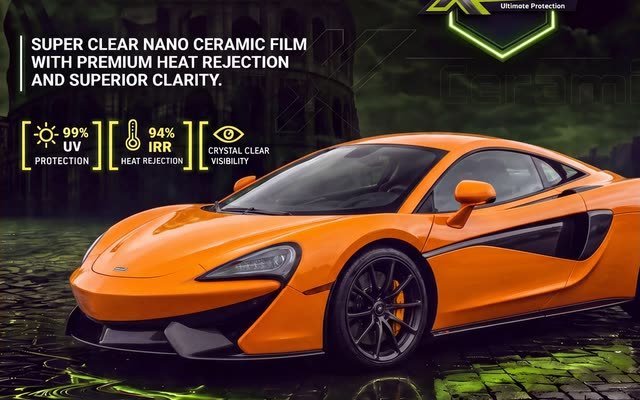
Thicker and more advanced films hold moisture a little longer. A multi-layer ceramic like X Pro Ceramic can take a few days longer to clear than a single-layer carbon. That is normal and is not a defect.
The first week: what to do and what to avoid
Do not
- Roll the windows down until the time in the table above has passed. This is the whole list if you only remember one thing.
- Clean the inside of the glass for at least a week. The film is still settling and the edges are vulnerable.
- Pick at bubbles or press on the film. Pushing a water pocket does not move it out, it stretches the film and can crease it permanently.
- Run a pressure washer at the window edges or take it through a touch car wash in the first few days.
- Stick anything to the inside of the glass — suction mounts, toll transponders, parking stickers — for the first couple of weeks.
Do
- Park in the sun when you can, especially in cool weather. It cures faster and clearer.
- Leave the haze alone. It goes away. Judge the job after full cure, not on day two.
- Call us if something is still there after the cure window — a defect and normal curing look similar early on and completely different after two weeks.
Cleaning tinted windows, for the next ten years
Once cured, tint is low-maintenance — but one product will destroy it.
Never use an ammonia-based glass cleaner on the inside. Ammonia attacks the film’s adhesive and the scratch-resistant coating. It causes exactly the purple discolouration and edge lifting people blame on “cheap tint”, and it is in most blue supermarket glass cleaners. Check the label; if it does not say ammonia-free, use it on something else.
What works instead:
- An ammonia-free glass cleaner, or simply warm water with a drop of mild soap.
- A clean microfibre towel — never paper towel, never a squeegee blade on the inside.
- Spray the towel, not the glass, so nothing runs down into the window seal and sits against the film edge.
- Wipe in one direction rather than scrubbing in circles.
The outside of the glass is unaffected — the film is on the inside. Wash the exterior however you normally would.
What is normal and what is not
| What you see | Normal? | What it is |
|---|---|---|
| Haze or milky look, first days | Yes | Trapped moisture evaporating |
| Small water pockets | Yes | Same — clears as it cures |
| Tiny specks of dust in the film | Usually | A handful is unavoidable even in a clean bay |
| A narrow light gap at the top edge | Yes | Deliberate, so the film does not catch the seal |
| Bubbles still there after full cure | No | Call us — covered by warranty |
| Film peeling at an edge | No | Call us |
| Purple colour after a year or two | No | Dyed film failing, or ammonia damage |
That last row is worth a sentence. Purple is the signature of cheap dyed film breaking down — it is not something that happens to carbon or ceramic. Every film we install is colour-stable and carries a lifetime warranty against bubbling, peeling, cracking, delamination and colour change for as long as you own the vehicle.
If you are having old film removed
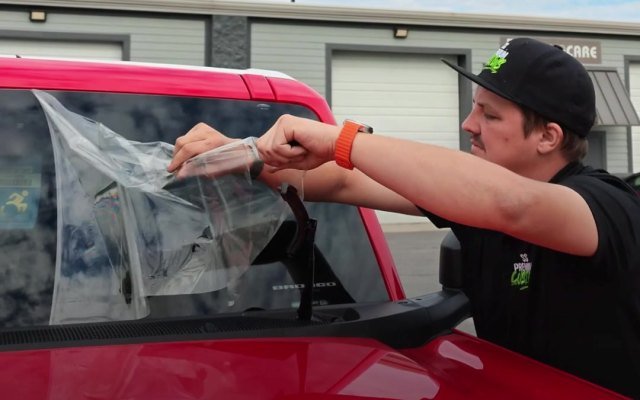
Removal is its own job and it is slow, particularly when the old film is failing — the top layer separates and leaves adhesive behind that has to come off the glass without damaging defroster lines on the rear window. Expect it to add real time to the appointment. If you are booking a re-tint, say so when you call so we can set aside the right slot.
Something not clearing up?
If you are past the cure window and it still is not right, bring it back. That is what the warranty is for.