




Windshield protection film has one job you can see and one you cannot. The one you can see: it has to be so clear that, from the driver’s seat, you forget it is there. The one you cannot: it has to stay stuck down at 75 mph, in the rain, with the wipers going, for years. Both come down to how it is installed.
If you are still deciding whether you want it at all, start with why windshield protection film makes sense. This post is about how we install it.
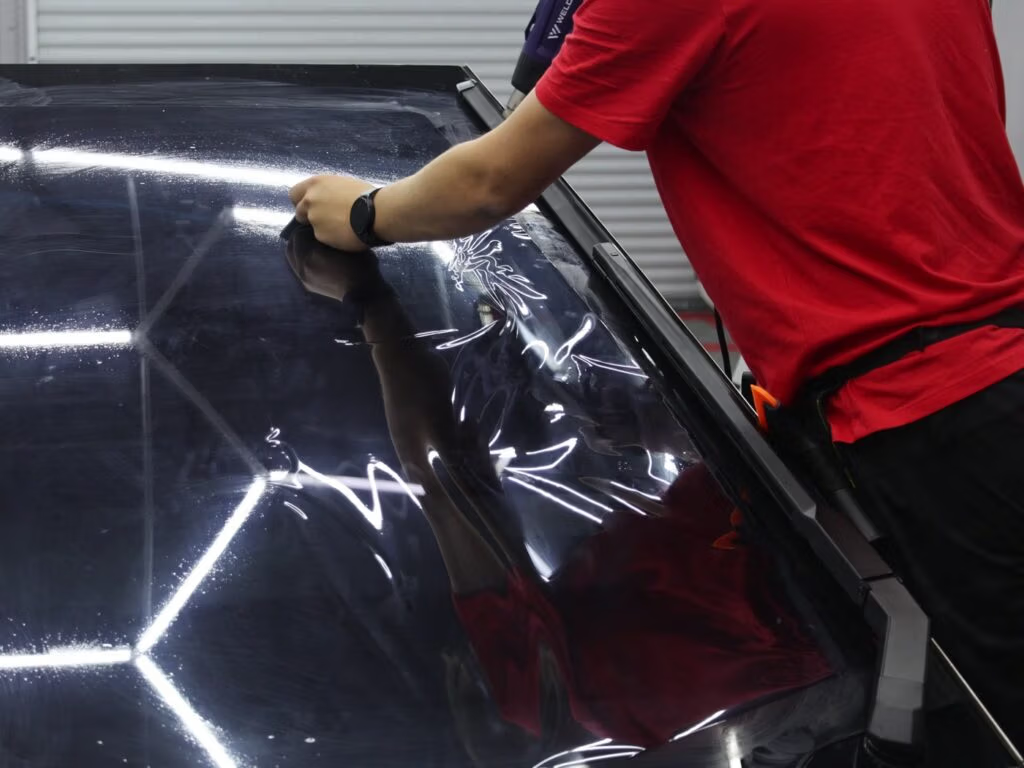
Short version: check the glass and repair any chips first, deep-clean and decontaminate the outside of the windshield, lay the film wet, shape it to the curve with heat, trim it tight to the edge, squeegee it out and let it dry. $450 installed, usually the same day.
Why a windshield is harder than it looks
A windshield is big, it curves in two directions, and you look straight through it. Film that is not shaped to the curve leaves ripples. A speck of grit under the film sits right in your line of sight. And an edge that is not tight to the trim is the first place the wind starts to lift it at highway speed. Every step below exists to prevent one of those three things.
1. Glass check first
Before anything else, we look at the windshield with you. Small chips are repaired before the film goes on, so they cannot spread underneath it. If the glass is already cracked, it needs to be replaced first — film is protection, not a repair. You can book the film on its own or add it to a tint or PPF appointment.
2. Deep clean and decontamination
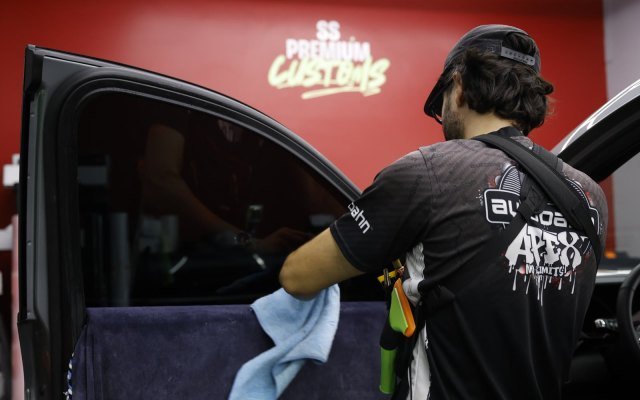
The film goes on the outside of the windshield, the side the rocks actually hit, so that is the side that gets cleaned like paint before a coating: washed, decontaminated and cleared of everything bonded to the glass. Anything left behind would sit under the film, directly in front of the driver.
3. Shaped to the curve
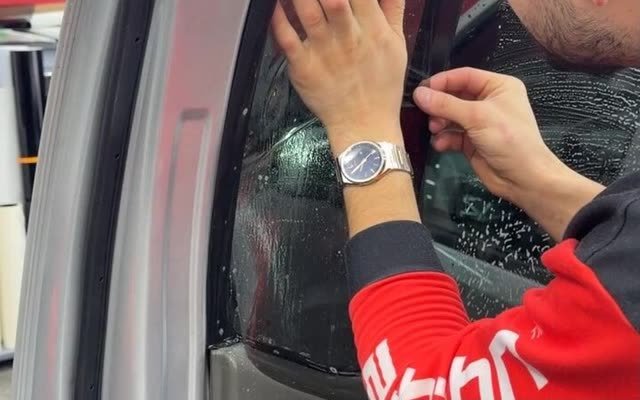
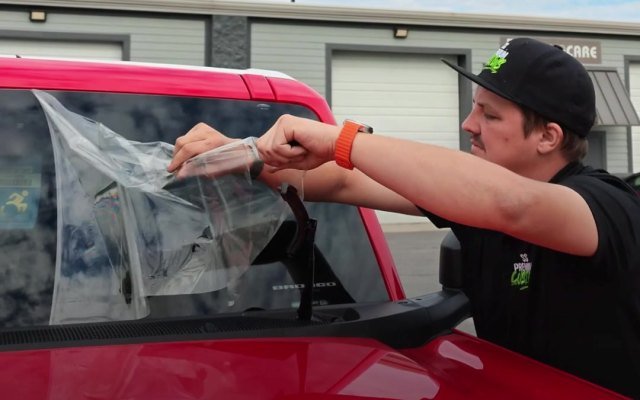
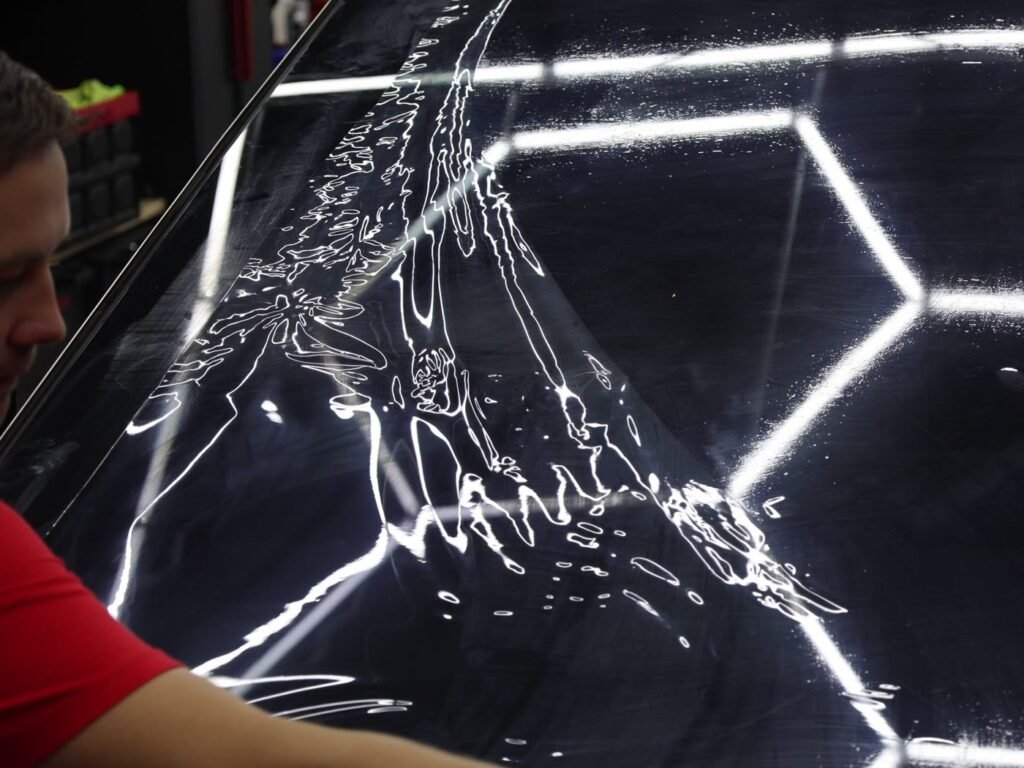
The film is laid on wet glass, positioned, and then shaped to the windshield’s curve with heat, little by little, until it lies flat across the whole surface. Rushing this step is what leaves the ripples and distortion you can see from the driver’s seat.
4. Trimmed to the edge
The film is trimmed right to the edge of the glass. A clean edge, tight to the trim, is what keeps it from lifting at highway speed — and it is also what makes the film nearly impossible to spot from outside.
5. Squeegee, set and dry
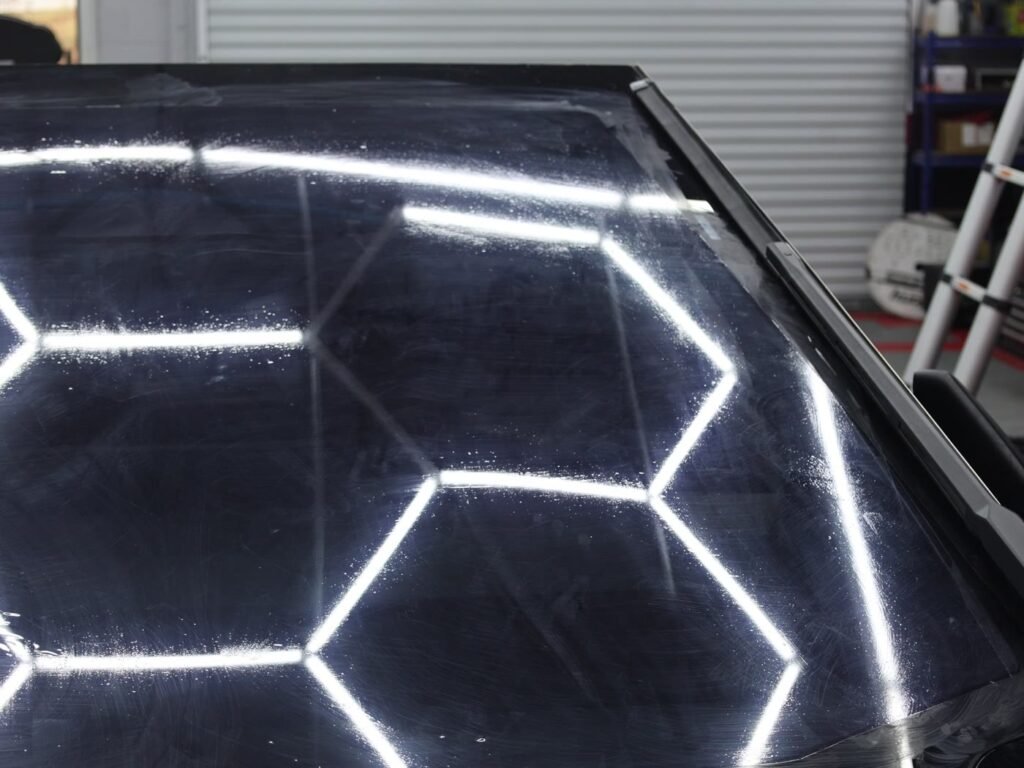
The water is pushed out and the film is set. For the first few days, a slight haze or a few small water pockets can show while the last of the solution dries out. That is normal and clears on its own. Before you leave, check the view from the driver’s seat with us: it should look like plain glass.
What the film does — and what it does not
- It absorbs the small hits that start chips and cracks: gravel off a truck, sand in a construction zone, debris on the interstate.
- It takes the pitting. Highway miles sandblast glass into tiny pits that turn headlights into starbursts. The film wears instead, and the film can be replaced.
- It keeps the factory windshield — no cut-out, no new urethane, no camera recalibration.
- It is not bulletproof. A big rock at highway speed, or a hit right at the edge of the glass, can still crack a windshield.
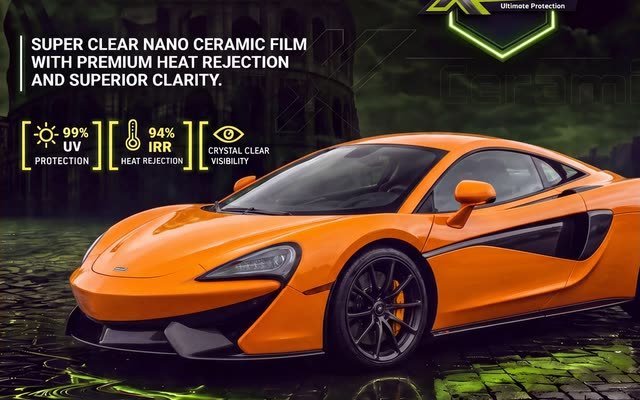
- It is not tint. Protection film is clear and goes on the outside. For heat, X Clear goes on the inside — it is included in our $600 full ceramic tint package.
Caring for it
- Replace old wiper blades before or right after the install. Worn blades drag grit across the film.
- Never run the wipers on a dry windshield. Use washer fluid first.
- Skip ice scrapers and razor blades. Use the defroster instead.
- Clean it with a soft microfiber and an ammonia-free glass cleaner.
Depending on highway miles and how often the wipers run, the film is typically replaced every one to three years. When it is worn, you replace the film, not the windshield.
Quick answers
How much is it?
$450 installed — a fraction of a replacement, especially on a car with cameras and sensors behind the glass.
Can I see the film from the driver’s seat?
No. It is optically clear, and on the car it is hard to spot even from outside.
Can you do it the same day as my tint or PPF?
Yes. Many customers add it to a tint or PPF appointment so the whole front of the car is protected in one visit.
Protect the glass before the next rock
Tell us the year, make and model, and whether the windshield has any chips today. We will get you booked, usually the same business day.